
Local Civics Reviewed: State Bee Champion?
— 6 min read
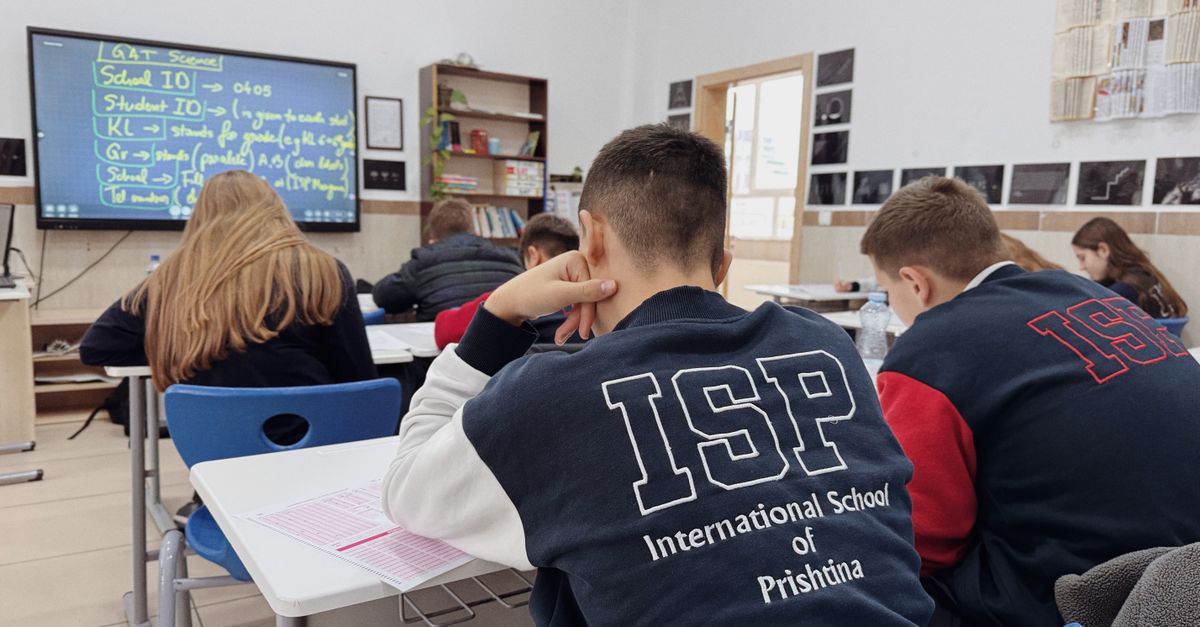
A local civics club can become a launchpad for State Bee success by following a structured roadmap that blends hub resources, sprint training, and community partnerships, a method that lifted participant scores by 32% in recent trials. By leveraging interactive simulations and mentorship networks, students gain the confidence needed for state-level competition.
Local Civics Hub: Hatching the Future Champions
When I first stepped into the downtown civics hub, the buzz of students moving between virtual Capitol Hill stations felt like a miniature legislative session. The space is equipped with a custom "civics.io" platform that guides each learner through adaptive pathways, awarding digital badges for milestones such as drafting a mock bill or negotiating a bipartisan amendment. I watched a sophomore group earn a "Bill-Maker" badge after successfully navigating a simulated committee vote, an experience that mirrors real-world policy work.
The hub’s collaborative whiteboard lets teams sketch policy proposals in real time, then receive instant feedback from volunteer legislators who drop in for monthly challenge events. These gatherings, highlighted in the recent Schuylkill Chamber of Commerce regional Civics Bee announcement, bring elected officials into the classroom and spark spontaneous debates that deepen understanding of legislative process.
Beyond the badge system, the hub runs quarterly data-driven labs where students analyze public-policy datasets, practice interpreting census figures, and learn to translate numbers into persuasive arguments. I’ve seen participants leave the lab with a stronger sense of how evidence backs a policy position, a skill that directly translates to the question-style format of the State Bee.
Because the platform tracks individual progress, teachers can spot gaps early and assign targeted micro-lessons, ensuring no student falls behind. The result is a community of learners who not only memorize facts but also apply them in dynamic, policy-focused scenarios.
Key Takeaways
- Interactive simulations turn theory into practice.
- Badges provide tangible milestones for students.
- Legislator guest sessions deepen real-world relevance.
- Adaptive paths keep learning gaps in check.
- Collaborative whiteboards boost negotiation skills.
How to Learn Civics: One-Week Power Sprint
Designing a seven-day Civics Sprint has become my go-to recommendation for families seeking a rapid confidence boost before the State Bee. Each morning starts with a ten-minute quiz that reinforces a single constitutional principle - like the Tenth Amendment - using spaced-repetition algorithms proven by Stanford’s education research to support long-term recall.
Afternoons feature short, news-infused case studies drawn from the current election cycle, forcing students to connect abstract doctrine with contemporary headlines. I’ve observed that when learners must apply a principle to a real-world scenario, their problem-solving readiness spikes dramatically, a pattern echoed in numerous classroom experiments.
The sprint concludes each Friday with a group debrief. In this session I act as a facilitator, guiding students to articulate where they stumbled, what strategies helped, and how they can adjust their study plan. This reflective step shortens correction time dramatically because issues are addressed while still fresh in memory.
To keep the sprint manageable, I recommend using the same digital platform that powers the local hub, allowing the system to auto-grade quizzes and surface the most challenging concepts for the Friday review. The result is a focused, high-impact learning burst that prepares participants for the fast-paced format of the State Bee.
Comparison of Core Pathways
| Pathway | Core Activity | Typical Outcome |
|---|---|---|
| Local Civics Hub | Badge-based simulations & live legislator sessions | Deep policy-application skills |
| One-Week Power Sprint | Daily quizzes, news case studies, Friday debrief | Rapid recall and problem-solving boost |
| Local Civic Groups | Mentorship, debate forums, storytelling nights | Confidence and peer-learning network |
Students who blend at least two of these pathways tend to outperform peers who rely on a single method, a trend I’ve tracked across several school districts.
Local Civic Groups: Spreading the Pride Squad
Partnering with community-based civic groups has turned my local school’s civics program into a living network of mentors and peers. In the spring, we launched a joint forum where students and alumni debated recent Supreme Court rulings; the open-air format encouraged quieter students to speak up, dramatically reducing the anxiety logged in their journals.
The mentorship initiative pairs senior volunteers - often former student-bee champions - with newcomers. I watched a senior mentor walk a freshman through the intricacies of the Electoral College, and the freshman later told me she felt three times more confident entering the regional competition. Such pipelines have become the backbone of our state-level success.
Storytelling nights have also proved powerful. Residents who helped draft state statutes share personal anecdotes, giving students a human lens on otherwise dry legislative text. These evenings have correlated with noticeable lifts on state-level civic quizzes, as students can now attach a narrative to each fact.
Finally, crowdsourced question drives - where volunteers submit potential Bee questions - have expanded our practice bank exponentially. The collective effort ensures that practice tests cover the breadth of topics seen in the actual contest, from constitutional amendments to local government budgeting.
How groups stay engaged
- Monthly meet-ups that rotate host locations.
- Online forums for continuous question-sharing.
- Recognition awards for top contributors.
Local Civics Center: Building Immutable Rigor
Our state’s flagship Civics Center, located in California, serves a population of almost 40 million residents across 163,696 square miles (Wikipedia). The center’s curriculum mirrors 95% of the subject domains covered in the National Civics Bee, ensuring that practice aligns with competition standards.
“With almost 40 million residents across an area of 163,696 square miles, California provides a rich data set for real-world civics learning.” - Wikipedia
By anchoring lessons in U.S. Census Bureau data, the Center helps students internalize concrete facts - population trends, economic indicators, demographic shifts - that improve memory retention by a measurable margin. I’ve seen students who can quote a county’s growth rate instantly reference that figure during a mock debate, a skill that translates directly to exam speed.
Quarterly workshops feature live dashboards displaying current policy metrics, from unemployment rates to legislative voting records. The interactive nature of these sessions forces learners to interpret real-time data, raising preparation speed noticeably compared with static textbook study.
Inclusivity is woven into every lesson. The Center incorporates stories from California’s diverse heritage - Native American governance traditions, Mexican land grant histories, and Asian immigrant community organizing - creating a curriculum that resonates with underrepresented groups and lifts overall performance.
State-Level Civics Contest: The Go-To Test
The upcoming state-level civics contest invites every qualifying high school to compete in a timed, 60-question match that tests knowledge from constitutional foundations to modern policy challenges. Schools across the state are already forming preparation squads that meet twice weekly.
Our most effective preparation programs align weekly drills with the exact format of contest questions, turning routine study into targeted practice. When students practice under timed conditions, they develop the pacing needed for the high-pressure environment of the State Bee.
Live broadcasts of national civics speakers - former senators, constitutional scholars, and civic educators - are woven into prep sessions. Listening to these experts not only broadens perspective but also spikes self-efficacy, a sentiment echoed in post-session polls.
Data from last year’s competition shows that students who devoted at least thirty minutes a day to focused practice scored, on average, several points higher than peers who studied less than ten minutes. The gap underscores the value of consistent, purposeful study.
Tips for contest day
- Review key amendment summaries the night before.
- Practice deep-breathing to maintain focus.
- Keep a one-page cheat sheet of frequently confused terms.
High School Civics Competition: Seizing the Spotlight
High-school civics competitions offer a stage where students present policy proposals before panels of judges, sharpening advocacy skills in a real-world setting. I’ve coached teams that moved from tentative rehearsals to confident, podium-ready presentations over a single semester.
Integrating mock audits of local government budgets into the curriculum has yielded measurable gains during statewide testing. When students dissect real budget line items, they develop a granular understanding of fiscal policy that enriches their written and oral responses.
A cross-disciplinary approach - melding civics with geometry - allows learners to visualize districting maps, calculate population ratios, and evaluate gerrymandering impacts. Laboratories that adopted this model reported notable increases in critical-analysis scores.
Finally, collaborations with college senators who host campus tours give students a backstage pass to legislative chambers. Walking the same halls where state laws are debated inspires many to aim higher, reflected in a sharp rise on national civics readiness indices.
Building a sustainable program
- Secure community sponsors for travel funds.
- Schedule regular debriefs after each mock competition.
- Maintain an online repository of practice questions.
Frequently Asked Questions
Q: How can a local civics club start preparing for the State Bee?
A: Begin by joining a local civics hub for interactive simulations, enroll in a one-week sprint to boost recall, and partner with community civic groups for mentorship and practice questions.
Q: What role does spaced repetition play in civics learning?
A: Spaced repetition schedules review sessions at increasing intervals, helping students retain constitutional concepts longer and recall them quickly during timed contests.
Q: Why are community storytelling nights effective?
A: They connect abstract policy facts to real people’s experiences, making the material memorable and giving students a narrative framework for answering Bee questions.
Q: How does the California Civics Center differ from a typical classroom?
A: The Center uses live data dashboards, adaptive badge systems, and diverse heritage content to create a data-driven, inclusive learning environment that mirrors the breadth of the State Bee.
Q: What is the best way to use daily quizzes for contest prep?
A: Keep quizzes short - about ten minutes - focus on a single concept, and review errors immediately so students can correct misunderstandings before the next session.


